Article · AI & Data
Where language models help in investment research, and where they do not
How we use language models to read filings, review code and write documentation, and the controls that keep investment decisions with people.
Key takeaways
- Language models are useful for reading, summarizing and checking work. They save the most time on tasks where a person can verify the output quickly.
- We do not let a model make or execute an investment decision. Every output that could affect a portfolio is reviewed by a named person before it is used.
- The hardest control is temporal: a model trained on recent data knows how history turned out, so it cannot be used inside a backtest without leaking the future.
Where models earn their place
Most of an analyst’s week is not spent forming views. It is spent gathering and checking the material those views rest on: reading a 200-page annual report on Form 10-K to find the three paragraphs that changed, tracing a covenant through a bond indenture, cleaning a dataset, or writing the documentation that lets a colleague reproduce a result. These tasks share a property that makes them suitable for language models. The output is easy to check against a source.
We use models in four areas today:
- Reading filings and transcripts. A model compares this year’s risk-factor section with last year’s and lists every change, each linked to the page it came from. The analyst reads the changes, not the whole document.
- Code review. Before a human reviewer sees a research change, a model flags common errors: misaligned dates, missing as-of filters, silent fills of missing values. It is a first pass, not a substitute for the reviewer.
- Documentation. A model drafts the description of a dataset or a function from its code and history. The owner edits and approves it.
- Search across internal research. Analysts can ask where a topic was studied before and get links to the relevant notes, rather than relying on memory.
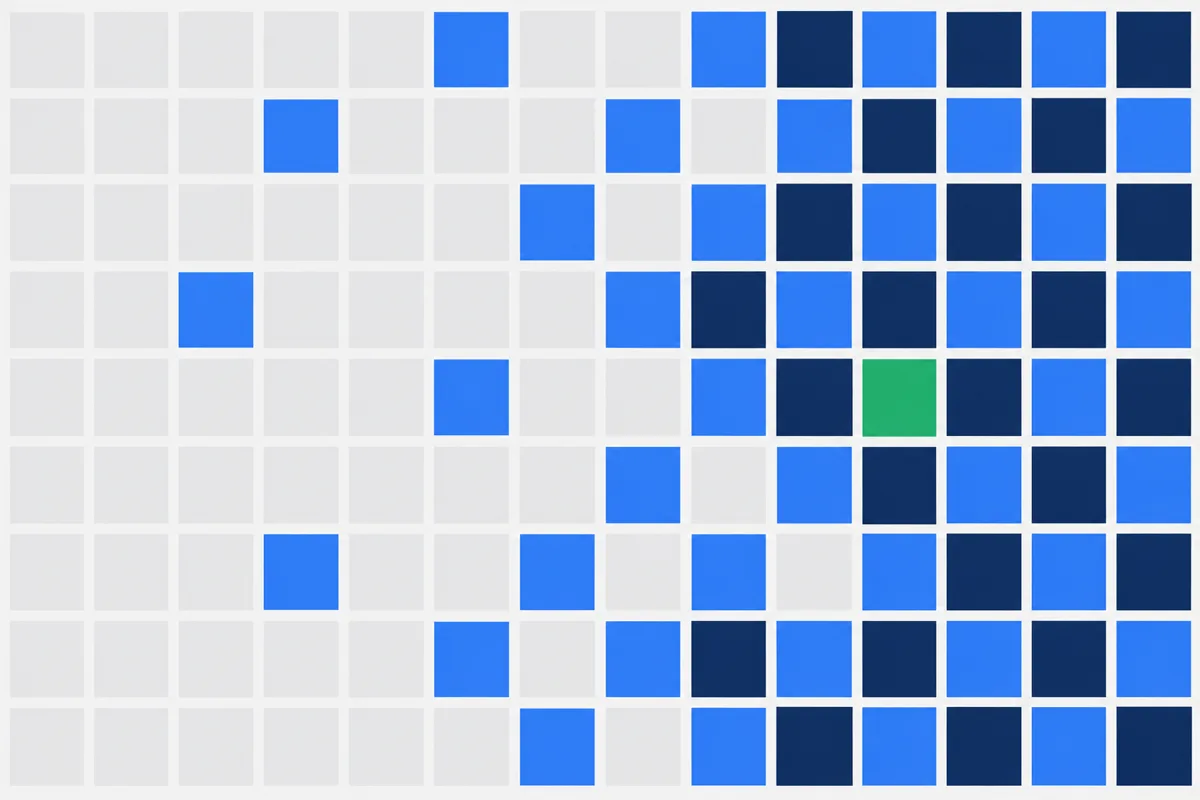
The chart above is simplified, but the pattern it shows is the one we aim for. Time saved on reading and documentation should move to the part of the job that a model cannot do: deciding what to test and judging whether the evidence supports it.
Where they do not
We do not use language models to choose securities, size positions or place orders. The reasons are practical rather than philosophical. A model’s output can be fluent and wrong in ways that are hard to detect without redoing the work. Its reasoning cannot be audited the way a written investment thesis or a statistical test can. And the same prompt can produce different answers on different days, which conflicts with our requirement that research be reproducible.
There is also a subtler problem. A model trained on text through 2025 knows that certain companies failed, that certain policies were reversed and how markets responded. Ask it to judge a 2019 earnings call and it may draw, without saying so, on what happened in 2020. This is look-ahead bias in a new form, and it is why model outputs are never used as inputs to a backtest unless the model’s training data ends before the period being tested. Our research paper on point-in-time data explains why that boundary matters.
The controls we apply
| Use | Who reviews | Key control |
|---|---|---|
| Filing comparison | Covering analyst | Every statement links to a page in the source document |
| Code review first pass | Human code reviewer | Model comments are advisory; merge requires human approval |
| Documentation drafts | Dataset or code owner | Owner signs off before publication internally |
| Historical text analysis | Research lead and model risk | Model training cutoff must precede the test period |
Three further rules apply across all uses. First, every prompt and response that touches research is logged with the model version, so a reviewer can see exactly what the model was asked and what it said. Second, no client or confidential portfolio data is sent to a model that runs outside our controlled environment. Third, each approved use is recorded in our model inventory and reviewed by the same independent function that validates our quantitative models, as described in our approach to risk management.
What we are watching
Models are improving quickly, and the line between a reading aid and an analytical tool will move. We expect to test models on narrower, verifiable research tasks, such as extracting structured terms from bond documents, where accuracy can be measured against a labeled sample before any use. The standard will stay the same: a model can do work that a person can check, and a person remains accountable for every decision that reaches a portfolio.
This material reflects the views of the author as of the date of publication, is subject to change, and is provided for informational purposes only. It is not investment advice or a recommendation to buy or sell any security. Time-use figures are hypothetical. Descriptions of tools and controls may change. Models, including language models, may not perform as expected and may produce incomplete or incorrect output. Investing involves risk, including possible loss of principal.