Research Paper · AI & Data
Point-in-time data: research that never sees the future
Why revised economic data and restated financials inflate backtests, and how storing every value by the date it was known keeps research honest.

Key takeaways
- Most economic and company data is revised after first release. A backtest that uses today’s revised numbers is trading on information no one had at the time.
- We store every value with two dates: the period it describes and the moment it became known. Research queries ask for data “as of” a date, never for the latest value.
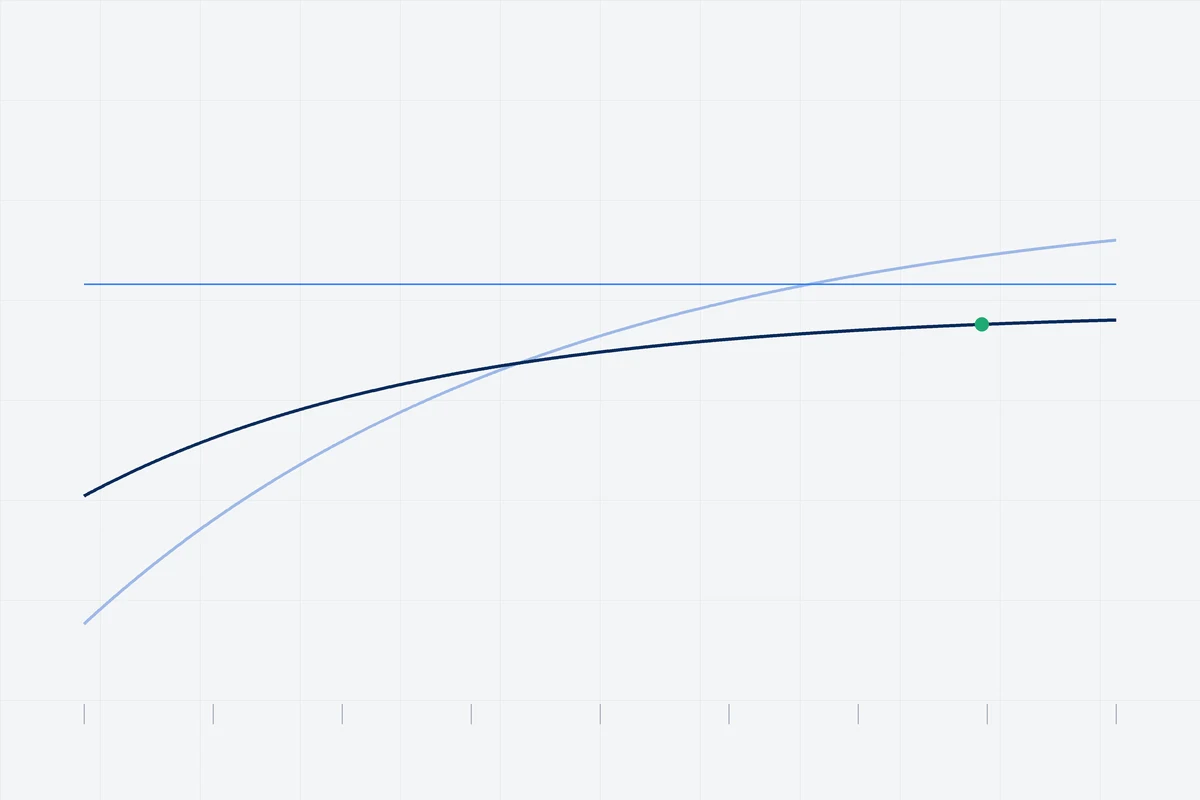
- In our tests, signals built on revised data overstate their hypothetical Sharpe ratio by a wide margin compared with the same signals built on point-in-time data.
The data you see today is not the data that existed
When the U.S. Bureau of Economic Analysis publishes its advance estimate of quarterly GDP, it is working with incomplete source data. A second estimate follows a month later, a third a month after that, and annual and comprehensive revisions can change the figure again years afterward. Payroll employment, retail sales, industrial production and inflation measures follow similar patterns of initial release and later revision.
Company data behaves the same way. Firms restate earnings after an audit finding, reclassify segments, or adopt a new accounting standard and restate prior years for comparability. Commercial databases often overwrite the original figure with the restated one, because most users want the most accurate history.
For investment research, the most accurate history is the wrong history. A trading rule can only act on what was known at the time it traded. If a backtest reads a revised GDP figure that was published two years after the trade date, the rule is being graded on hindsight.
A worked example
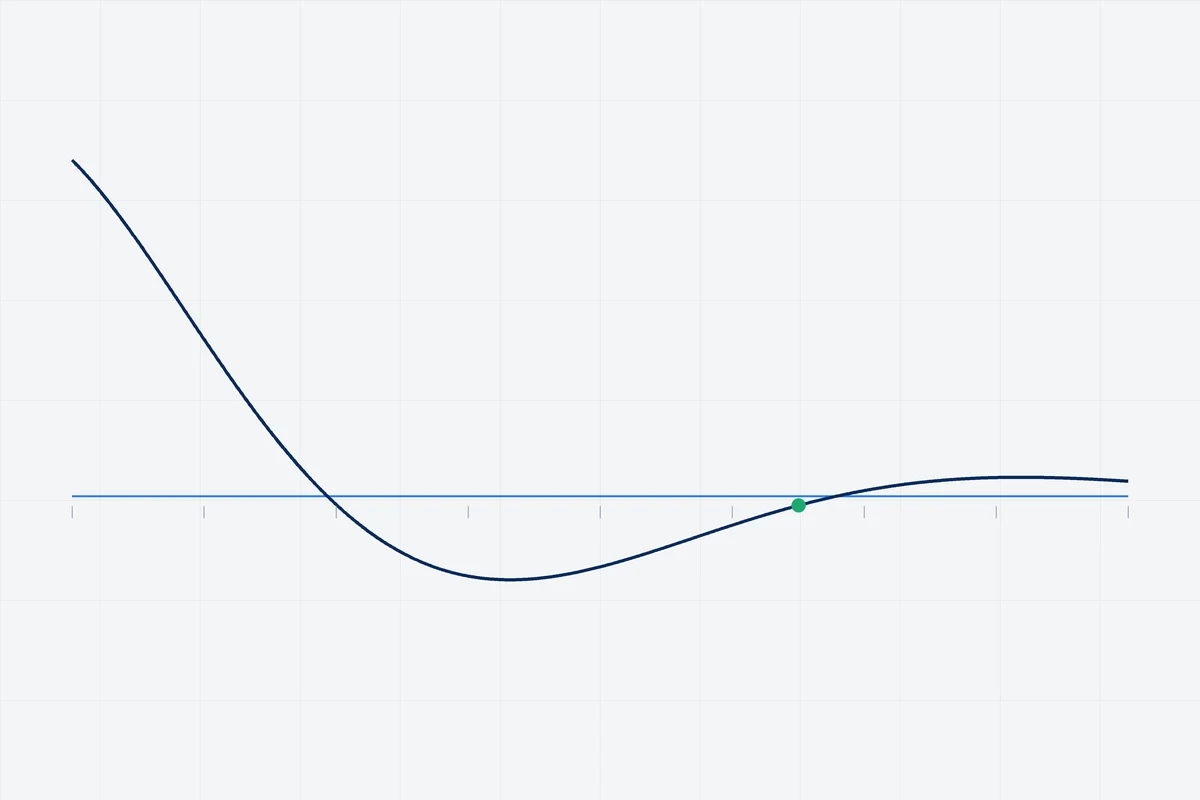
Consider a simple macro rule: reduce equity exposure when the latest reported quarterly GDP growth falls below 1.5 percent. In quarter 5 of the chart above, the advance estimate showed 1.2 percent growth, which would have triggered the rule. The figure was later revised to 1.9 percent. A backtest run on revised data never sees the weak print, never cuts exposure, and records a different return path from the one an investor following the rule would actually have experienced.
The problem compounds in signals that use changes rather than levels. A “growth surprise” measure built from revised data compares one revised number with another, and both carry information that arrived later. The resulting signal can look smooth and well-timed in a way that the real-time version never was.
How we store data: two clocks for every value
Our data platform records each observation on two time axes. The first is valid time: the period the value describes, such as the third quarter of 2025. The second is knowledge time: the moment the value was published or entered our systems. A revision does not overwrite the earlier value; it adds a new row with a later knowledge time.
Research code never asks for “GDP for the third quarter.” It asks for “GDP for the third quarter, as known on a given date.” The platform returns the most recent value whose knowledge time is on or before that date. Backtests pass the simulated trade date as the as-of date automatically, so a researcher cannot forget to do it. Our technology overview describes the platform in more detail.
| Valid time | Knowledge time | Value | Returned for a query as of |
|---|---|---|---|
| Q5 | Day 30 after quarter end (advance) | 1.2% | Days 30 to 59 |
| Q5 | Day 60 after quarter end (second) | 1.5% | Days 60 to 89 |
| Q5 | Day 90 after quarter end (third) | 1.6% | Day 90 until the annual revision |
| Q5 | Annual revision | 1.9% | After the annual revision |
Survivorship and the missing companies
Revisions are one form of look-ahead bias. Survivorship is another. A stock universe drawn from today’s index members excludes every company that was delisted, acquired or went bankrupt during the test period. Those firms are disproportionately the ones a value or credit signal would have bought, and their losses disappear from the backtest. We keep full membership histories for every universe, including delisted securities and their final prices, and construct the universe as of each rebalancing date.
The same logic applies to bond research. A corporate bond universe built from currently outstanding issues omits bonds that defaulted or were called, and it understates both credit losses and the reinvestment risk that callable bonds carry.
What this means for research
Point-in-time storage costs more. Each dataset is larger, ingestion must capture every vintage rather than only the latest, and some vendors do not supply historical vintages at all. Where a vendor cannot, we begin recording vintages ourselves from the date we subscribe and restrict research to that period, or we apply an explicit publication lag that approximates when the data would have been available.
We consider the cost unavoidable. As the comparison above shows, the gap between a revised-data backtest and a point-in-time backtest is often larger than the effect a researcher is trying to measure. A signal that only works on revised data is not a signal. It is a record of what was later learned. The topic comes up often in our research questions for candidates, because the habit of asking “when was this known?” matters more than any single technique.
This material reflects the views of the author as of the date of publication, is subject to change, and is provided for informational purposes only. It is not investment advice or a recommendation to buy or sell any security. All GDP figures, Sharpe ratios and backtest results shown are hypothetical. Hypothetical results have inherent limitations: they are prepared with the benefit of hindsight, do not reflect actual trading, and may not account for the impact of market liquidity, costs or other factors on decision-making. Quantitative models may not perform as expected and may rely on data that is incomplete or incorrect. Government agencies are named for context only. Investing involves risk, including possible loss of principal.